As an initiative supported by the Ministry of Business, Innovation and Employment (MBIE), TAIAO is committed to promoting and facilitating the adoption of artificial intelligence (AI) and data science in New Zealand's environmental sector.
In this newsletter, you’ll find more information about:
International Conference on Learning Representations (ICLR)
QML Podcast episode
Project Team spotlight
What’s coming up
International Conference on Learning Representations (ICLR)
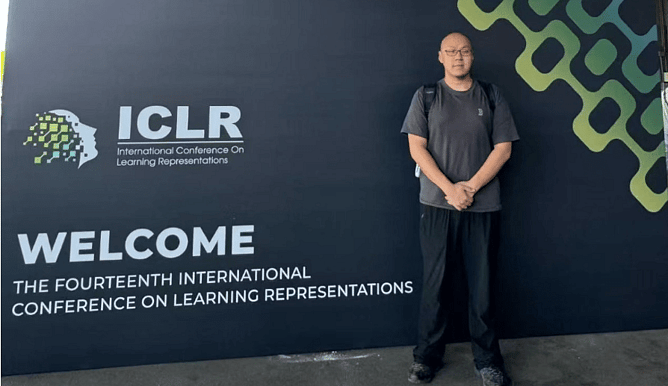
PhD student Di Zhao travelled to Rio de Janeiro to present his paper on building AI models that stay accurate in new or unseen environments (for example varying light conditions, different habitats, or changing weather) at the world leading ICLR conference.
Di found the trip incredibly inspiring and was able to learn more about the rapid advancements happening in this space and participate in thought-provoking discussions.
“I gained a lot of fresh inspiration, particularly in the areas of continual learning and agentic AI. It was a great opportunity to see where the field is heading next.”
Di’s work was supervised by Dr Yun Sing Koh. He was very grateful to have been sponsored by TAIAO to attend this conference and showcase on the international stage how New Zealand is growing in environmental AI.
New episode released for the Quantum Machine Learning podcast
This month on the TAIAO Quantum Machine Learning podcast, we dive into how quantum models can spot patterns in data but that doesn't always mean it understands them. In some cases, it simply memorises data which can lead to unreliable predictions.
Host Léa Cassé explores how spectral diagnostics (checking what kinds of patterns the model is responding to) and Fourier analysis (breaking those patterns into their components) can reveal whether a model has genuinely learned underlying rules or is just copying what it sees. Understanding this difference is essential for building quantum models that can make trustworthy predictions on new data.
Listen to the full episode here.
Project Team spotlight
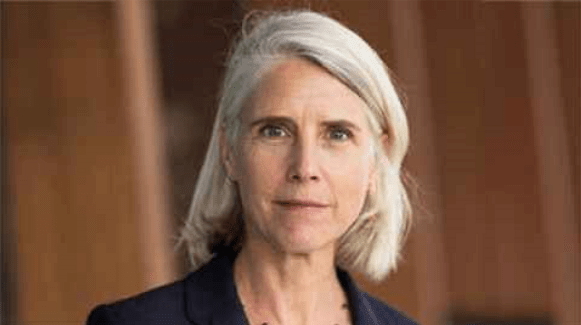
Professor Karin Bryan is a coastal scientist with training in geography, physics, and physical oceanography. Within TAIAO, her role is to help shape environmental use cases and to ensure that meaningful research outputs are developed for practitioners and decision-makers. Karin has worked on projects focused on wave and storm surge prediction, sediment transport, coastal change, and the impacts of sea-level rise.
She is currently working on a raft of exciting projects including using network-based neural models to improve marine heatwave prediction in coastal and estuarine systems, alongside Varavara Vetrova and Dr. Yun Sing Koh. She is also working with Nick Lim and Anany Dwivedi to test how large language models can synthesise complex environmental information, using estuarine sediment loading as a case study.
Across her projects, Karin focuses on connecting environmental science with emerging AI methods to support climate resilience and coastal management.
What's coming up
Student research success
Several TAIAO students have recently had their research papers accepted, which is a reflection of the work that is continuing to happen within the programme. Our students have been looking into some exciting research, and we will share more information about this in next month’s newsletter.